
Interview with Jessica Hanna
Katie Lindsay, Artistic Director of Big Little Theater Company, sat down with Jessica Hanna, the 2026 Recipient of the Director-Driven Production Grant, to talk process, collaboration, and her directorial vision for O: A Rhapsody in Divorce by Jami Brandli.
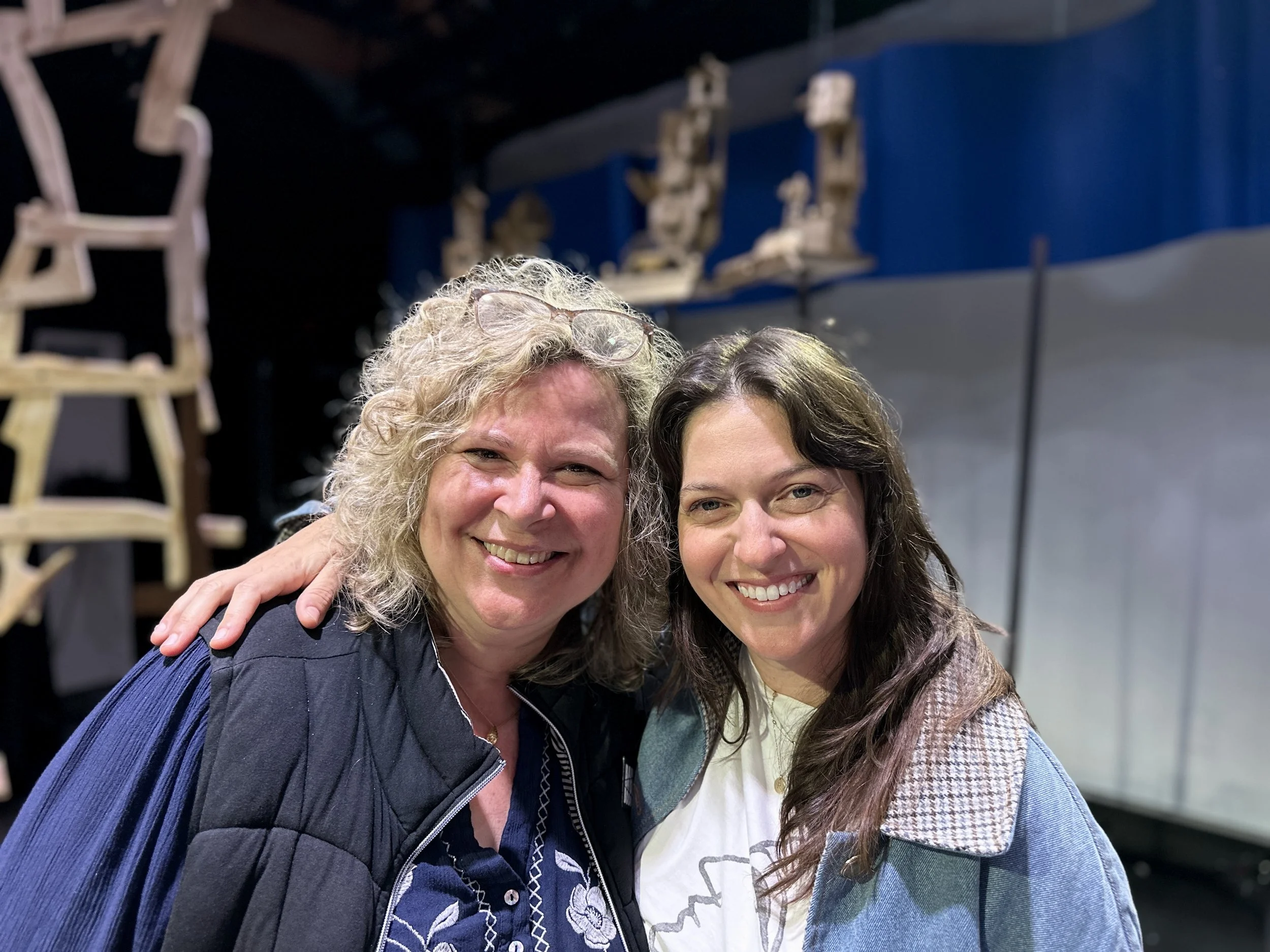
Jessica Hanna & Katie Lindsay at the table read for O: A Rhapsody in Divorce.
Katie: Tell me the origin story of your collaboration with Jami Brandli on O: A Rhapsody in Divorce.
Jessica: Jami and I met in 2014 when I was an actor (I know! It was the last full play I’ve been in as an actor) in her play S.O.E. That was also where I met Cece Tio, who produced that play and she is producing this production as well! Jami and I really enjoyed working with each other and became friends through our colleagueship. Supporting each other and our work however we could.
Both Jami and my lives shifted 10 years ago when each of our marriages ended and we both were couch/apartment hopping as we figured out the next chapters of our lives. We spent time together talking through how to grow and change both in our personal lives and in our theatre making. Late one night in that period, Jami texted me, “What about a female Odysseus?” I texted an immediate, “YES PLEASE!” I have a long love of the Odyssey for many reasons, one of the earliest being that I grew up in Ithaca, NY and had always loved that the main point of the Odyssey was to get back home to Ithaka. But at the time Jami said it, I was definitely in the throes of figuring out where and what Home was, now that my life had shifted.
Jami and I talked about the different expectations for women in a separation or divorce situations and how home is so often defined around a woman or the woman “stays” at home and rebuilds from there, so what was home for us as we bounced around Los Angeles. We would talk about it on and off and then in 2018 Jami decided to go for it and write the play as part of the Playwrights Union write a play in a month challenge. Which she did! And part of that challenge is that they give readings to the plays that are created. Jami asked me to direct that first reading. And Donna Simone Johnson was in that original reading, playing Woman. It’s amazing that it has worked out that they are in town and available to play the part in this production!
There was a moment where it was going to be part of the 2020 season at Sacred Fools, but…as we all know that season never happened. I have been the director in two other workshops of the piece, the Inkwell workshop in 2022 and the Outside In workshop in 2024.
Katie: What’s the journey been like shepherding the play from development to production?
Jessica: It has been an absolute joy growing this play with Jami. So much of the play that she originally wrote in that month-long challenge is still in the play. Dare I say that, like Athena, much of this play emerged fully formed from Jami’s head. There have been changes through the workshops for sure, but mostly additions and refining, no major changes of order or huge edits. Jami will listen to ideas and notes and then be very honest about what works or doesn’t for her, so I know I can be totally honest and up front with her. It makes for great conversation that can go very deep. During the workshops we’ve had fantastic actors and creative artists in the room contributing to the conversation as well. Jami was up for some of my more non-traditional development ideas - like having three totally different casts read the play over the course of a week. So Jami could hear when certain lines were hitting a certain way coming through different folks - like, say a joke isn’t landing said by three different actors, then we need to look at that joke and work on the language. It gives the playwright useful feedback quickly. So that part of development has been really exciting and useful and we’re both incredibly grateful to all the actors that have been in the room with us and this play over the years, they are forever in the DNA of the play. And now the joy of the last six months has been putting together this fantastic design & production team to make the work three dimensional and gorgeous. I am so excited to be working with this team. I have a lot of history with most of the team and we are all very excited to be getting to create together again. All of the designers are collaborative and I can’t wait to get to tech when we’re all making in the room together, each of them bringing their genius elements and building the world that will uplift this story in ways Jami and I could never dream of. I love tech!
“Jami was up for some of my more non-traditional development ideas - like having three totally different casts read the play over the course of a week. So Jami could hear when certain lines were hitting a certain way coming through different folks - like, say a joke isn’t landing said by three different actors, then we need to look at that joke and work on the language. It gives the playwright useful feedback quickly. ”
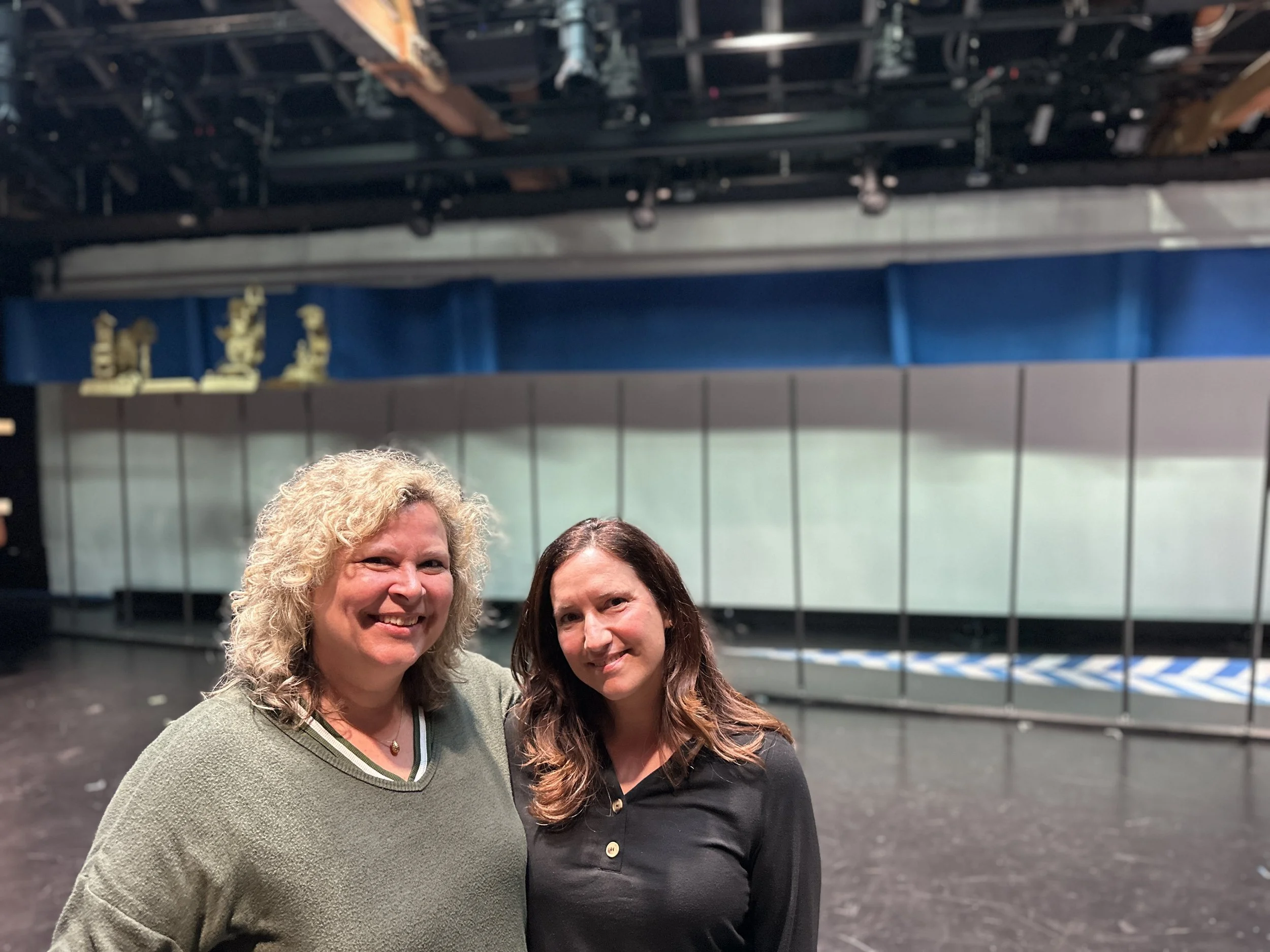
Given your long history with this play, can you identify your fingerprints in the play itself?
The play is Jami’s but there are elements of our early conversations about Home and women’s place and cultural expectation that I can hear in the play. I know there are some elements that have been added during workshops that came from the questions I was asking or my suggesting the need for something new to happen - the Siren Song of Hope, when the women try to convince her that her husband wants to fix things, came from the conversations during a workshop.There are other elements of my own story that are in the play, but I don’t want to take any credit for Jami’s work. She’s created something out of many stories both true and mythical through her brilliant imagination and on to the page.
I can say that there is a physical gesture that is written in the script that comes directly from me describing how one of my favorite teachers, Ellen Lauren, reminded me where “Home” was. I don’t want to say too much more than that because I don’t want to give the gesture away. But mad props to Ellen for that gesture, I literally do it sometimes to remind myself that I am my Home.
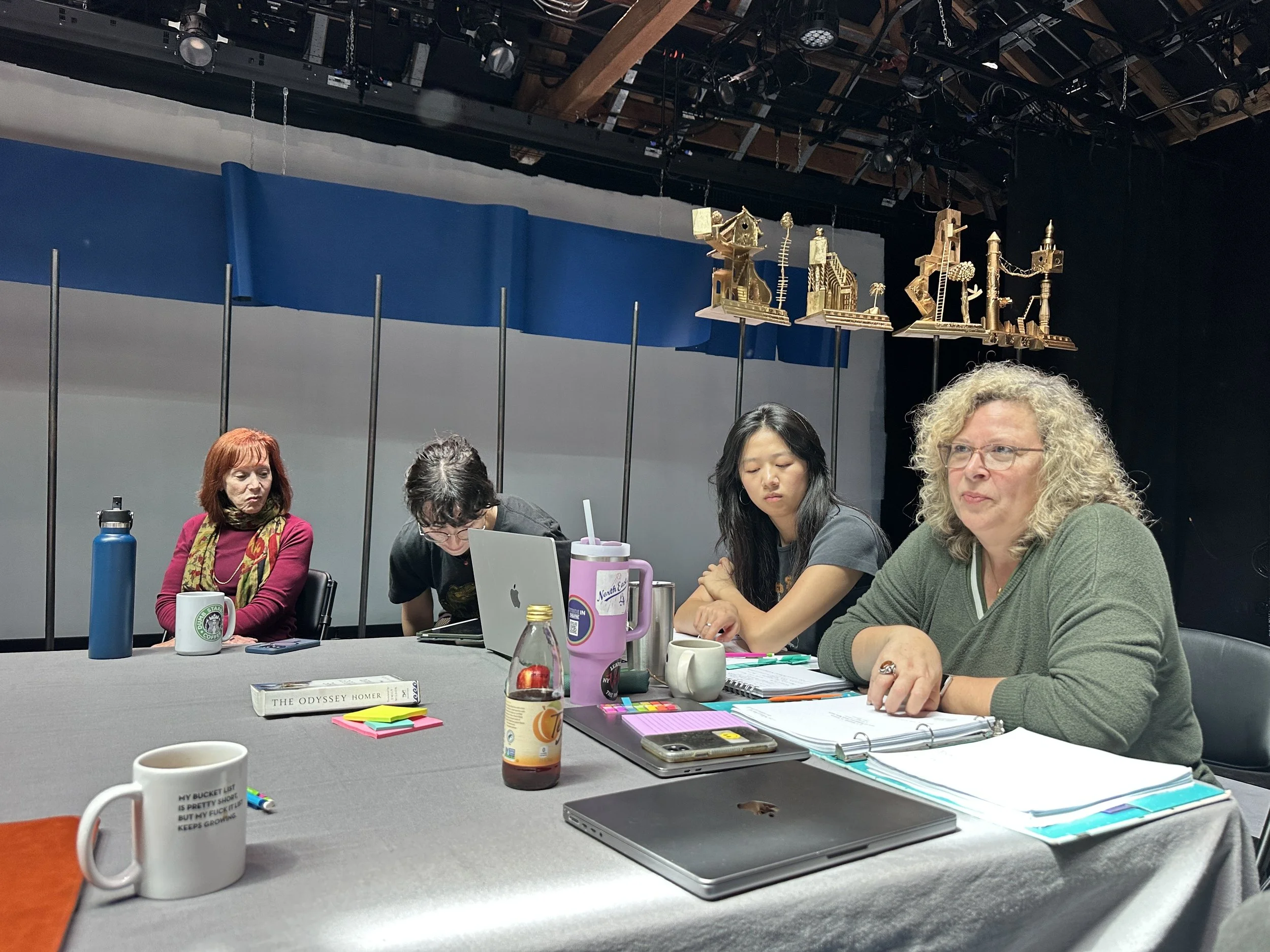
Jessica leads tablework for O: A Rhapsody in Divorce. From Left: Victoria Hoffman (casting director),
When the play is still in the early creation process then I am wearing more of a dramaturgical hat in my questioning. I want to help the playwright find and craft the story they want to tell. A lot of that work is reflection back - here is what I hear, or see, from what’s on the page. Is that what they wanted to convey? Knowing, of course, that art is subjective and the playwright can take or leave my reflections or suggestions - it’s always their play. If I am making a space for the playwright to have a workshop then I am thinking about who the other artists in the room should be, who will be the most helpful to a playwright? Sometimes I bring in actors in workshops who aren’t the exact type that has been asked for in the script but that actor may have great insight or experience with new play development that could be really helpful to the playwright and their script.
When I get into production mode as a director it becomes more about solving the puzzle - oftentimes I think of directing a play as working on a 3D jigsaw puzzle: which piece goes where to make the picture the playwright intended? In the case of a new play, the picture may still be coming in to view at the same time as the puzzle pieces are coming together, so it’s much more fluid and some pieces will go in and then we realize they don’t quite fit because the picture has shifted, so I have to make choices to get to the picture the playwright wants and sometimes that means letting go of pieces that I really thought were right.
Our stage management team is also thrilling because I get to work with Ariana Michel again - we first met when she was in college at CalPoly Pomona and I directed POLAROID STORIES there in 2019. I believe it was her first time stage managing and she was brilliant at it. Since graduating she has been going back and forth to NYC for SM jobs and I have gotten to work with her as a director (HUNGRY GHOST) and as a producer (TORERA, the first production at Outside In’s ArtSpace last fall) and I am very grateful she is in LA for this production. Coming on as ASM is David Hermosillo, who was also in that production of POLAROID STORIES at CPP, since graduating he’s worked a lot with Independent Shakespeare Co. and I’m very excited to get to work with him again.
And finally there is my Ass’t Director, Jiahui Ji, who I met when we brought them on as an intern through the Edgerton Fellowship offered to Occidental students. Hui has become an integral part of Outside In since their internship, currently working in our box office and on the marketing team. We have been talking about directing since they started interning and the workshop we did on O at Outside In in the summer of 2024 was during their internship, so they were part of that workshop and as soon as it was confirmed we were producing the play, I asked them to come on as Ass’t Director because their passion for and insight into the play has been present from that workshop. Plus they studied Homer and The Iliad and The Odyssey in college and they have helped to craft the dramaturgy/research packet for the play.
Isn’t this team amazing!
Jessica and playwright Jami Brandli at rehearsal for O: A Rhapsody in Divorce.
Why does this play speak to you?
Well, there’s the obvious that it is representative of some of the happenings in my own life. And also because of the conversation of what or how a person has to find their own path and that the expectations or norms, if believed in, make for stormy seas that are no fun to navigate. As soon as I can let go of what I thought life was supposed to be, then I can embrace what life actually is and look forward to meeting life and excited about what life is offering.
I also resonate with the depiction of how quickly life can change, an unexpected event happens and suddenly the way that I look at the world has completely changed and feels surreal and takes time to adjust to. Change is the constant in life, but that doesn’t make rolling with those changes any easier. I think O’s story of figuring out that she has the answers, or at least the tools to find the answers, inside of her is a constant lesson for me. That line “No one is going to save you.” has a lot of meaning for me. I think I grew up believing that one person could make all the difference in whether I was happy or not…when the truth is that no one, outside of myself, is going to make me happy or save me from the hard moments of life. Some of this may be obvious to many, but I think each of us figures it out in our own time, if we have the privilege of growing older and learning more about ourselves and how we can thrive in the world.
And it’s about a woman figuring out how to grow and be strong and more herself every day. I want to see more stories about that. All the time. Give me the femme heroes journey any and every day!
How does your role as director differ when you’re in the development process vs a production process?
When I’m in a development process with a playwright I ask a lot of questions of the playwright, that’s the joy of working on a new play: The person who might actually have the answers is right there and I can ask them the why or the where did this come from or what are you hoping to show in this moment? Such a gift to have the playwright present.
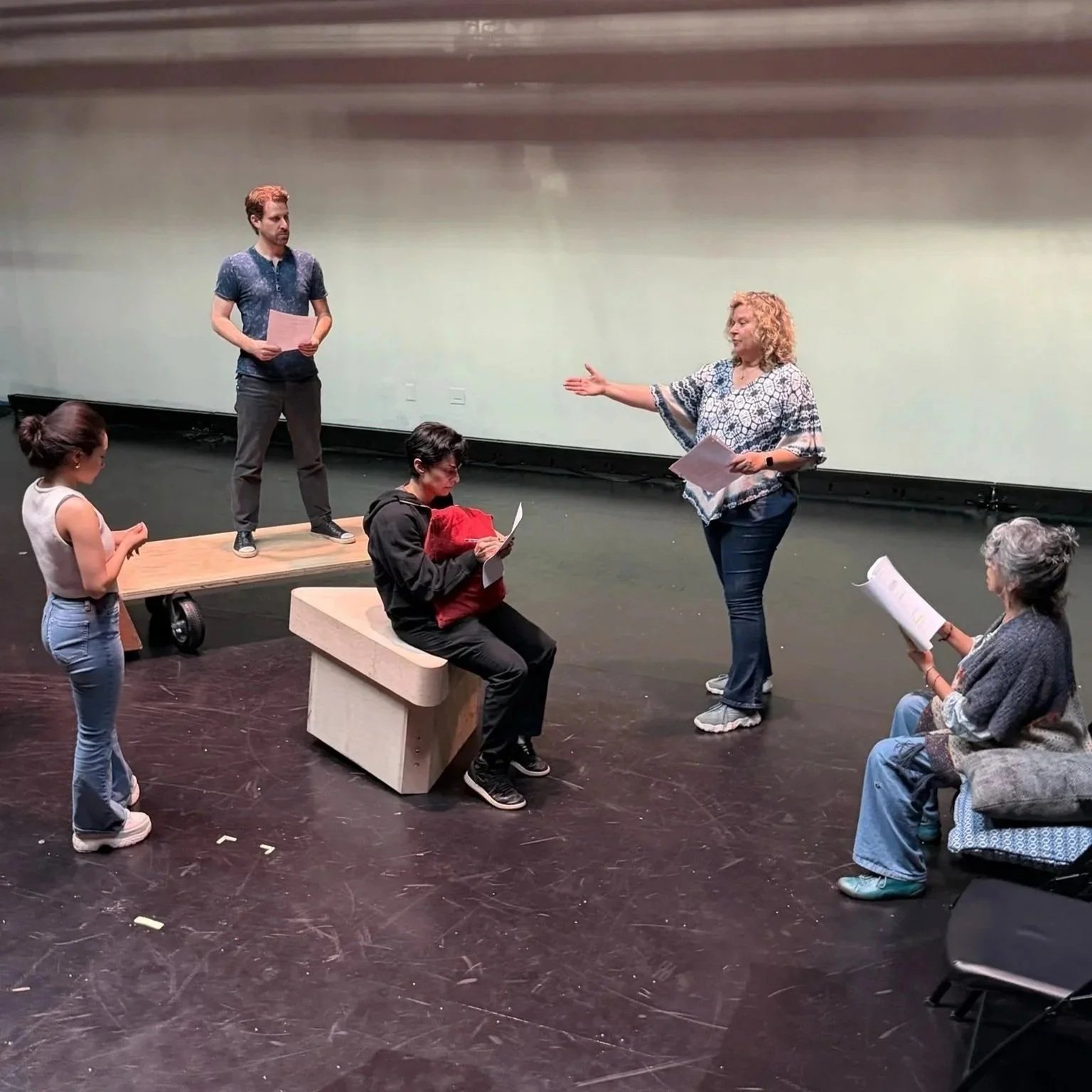
Blocking rehearsal for O: A Rhapsody in Divorce.
New play work is never an easy ride. I remind everyone involved that we have to be flexible and ready to make changes because those changes will improve the play. The playwright & the play are our guide stars. What is best for the play? Sometimes the most brilliant design idea turns out to not be what’s best for the play. It can be heartbreaking because sometimes months of work go into a moment that I have to cut. But if we’re all working toward a better play, then hopefully all involved know the hard choice is the best choice.
I also want to say that there is care for the actors in new play work that is different. Because we may make a change that seems like just a line cut to me and the playwright, but the actor may have based their whole character on that line and we have just taken away a piece of the emotional or psychological infrastructure they’ve been creating for themselves. Actors are so brave and that has to be acknowledged and supported, especially in new play development. I strive to make a supportive space and part of that is making sure there are conversations around changes so that actors don’t suddenly feel set adrift. Especially later in the process, say in the midst of previews, when changes could still be being made.
Alexandra Lee, Andrew Brian Carter, Rose Portillo, and Donna Simone Johnson rehearse a scene.
Tell me about how you assembled this fabulous team of collaborators.
This is a DREAM TEAM! I am so grateful all of these folks said yes!
On the design front: I’ve known and worked with Brandon Baruch for twenty years now - we met when he lit a play at Occidental College that I directed in their New Works Festival and when he graduated two years later I immediately hired him to design a show at Bootleg Theatre. Most recently we worked on HIDE & HIDE at Skylight Theatre, which was a deeply collaborative tech process.
Also on that show was Amelia Anello, a sound designer who was recommended to me by Cricket Myers and Noel Nichols. Amelia is a few years out of USC and an excellent collaborator who showed great creativity and flexibility when working on a new play and I am thrilled she said yes to this show.
Ann Closs-Farley is one of my longest term collaborators, even longer than Brandon! Ann and I have been working with and supporting each other for about 25 years and Ann’s joy in creativity is infectious and inspiring and she is also deeply honest and will give me a hard note with a smile on her face. I always know she has an eye on the production as a whole and I trust her because of that. She has brought on Danae Iris McQueen to co-design with her and I have been an admirer of Danae’s work (ARROWHEAD and FOURSOME, both at IAMA)
I also want to highlight that Sibyl Wickersheimer and Maureen Weiss, our set Designers, work together under the banner, Scene Shift, and I am so very excited to be working with both of them and supporting Scene Shift, which has been actively promoting women & femme scenic designers since the pandemic. Check out the book they put out that features a bunch of femme designers talking about the business and their careers and how they have navigated making life as an artist, all with photos of the designers work - it’s a beautiful book and resource, give it to the designers and design students in your life to inspire them! We will be featuring a pre-show talk with Scene Shift as one of our outreach/activation events for O: A RHAPSODY IN DIVORCE.
I made a play, Georgette Kelly’s I CARRY YOUR HEART, back in 2017, with Sibyl (scenic), Brandon (Lights) and Ann (costumes) and it was one of my favorite design collaboration experiences, so I am thrilled all three of them have said yes again. And I love that they are bringing on partners or associates because ten years later they are very in demand creators. Expanding the circles with more artist collaborators is a way for me to work with a larger group of folks that I hope to grow working relationships with in the future.
Also on the design team are Nicole Bernardini (Props), who I have had the joy of working with over the past few years - first on Lisa Sanaye Dring’s HUNGRY GHOST at Skylight - and her way of thinking about props and how to reflect the aesthetic of a show in the smallest detail is exactly what I’m looking for in a props designer. I love her thoughtfulness.
Celina Lee Surniak is an incredible intimacy & fight director who I first worked with on HIDE & HIDE and CALIFORNIA STORY last year. She really levels up the production whenever I have worked with or seen her work. She has a fantastic way of growing a moment that could be blown through into something unforgettable. There was a moment in HIDE & HIDE that I had talked with her about what I thought the moment needed & meant for the characters and what she delivered, and then Brandon & Amelia enhanced with their lights & sounds, was beyond anything I could have created. She is an incredibly strong creative who believes in collaboration more than dominating with her own ideas.
Zoe Lesser and I have been friends since pandemic and we get together and talk directing and movement oriented shop all the time. And when I was looking for a choreographer with very specific skills (tap dancing, mainly) I was very excited to turn to her and say, I think I have something we can finally collab on - which doesn’t happen between director friends very often, since directors are usually the only director in the room. I am SO excited to get to work on these specific moments of dance with her!
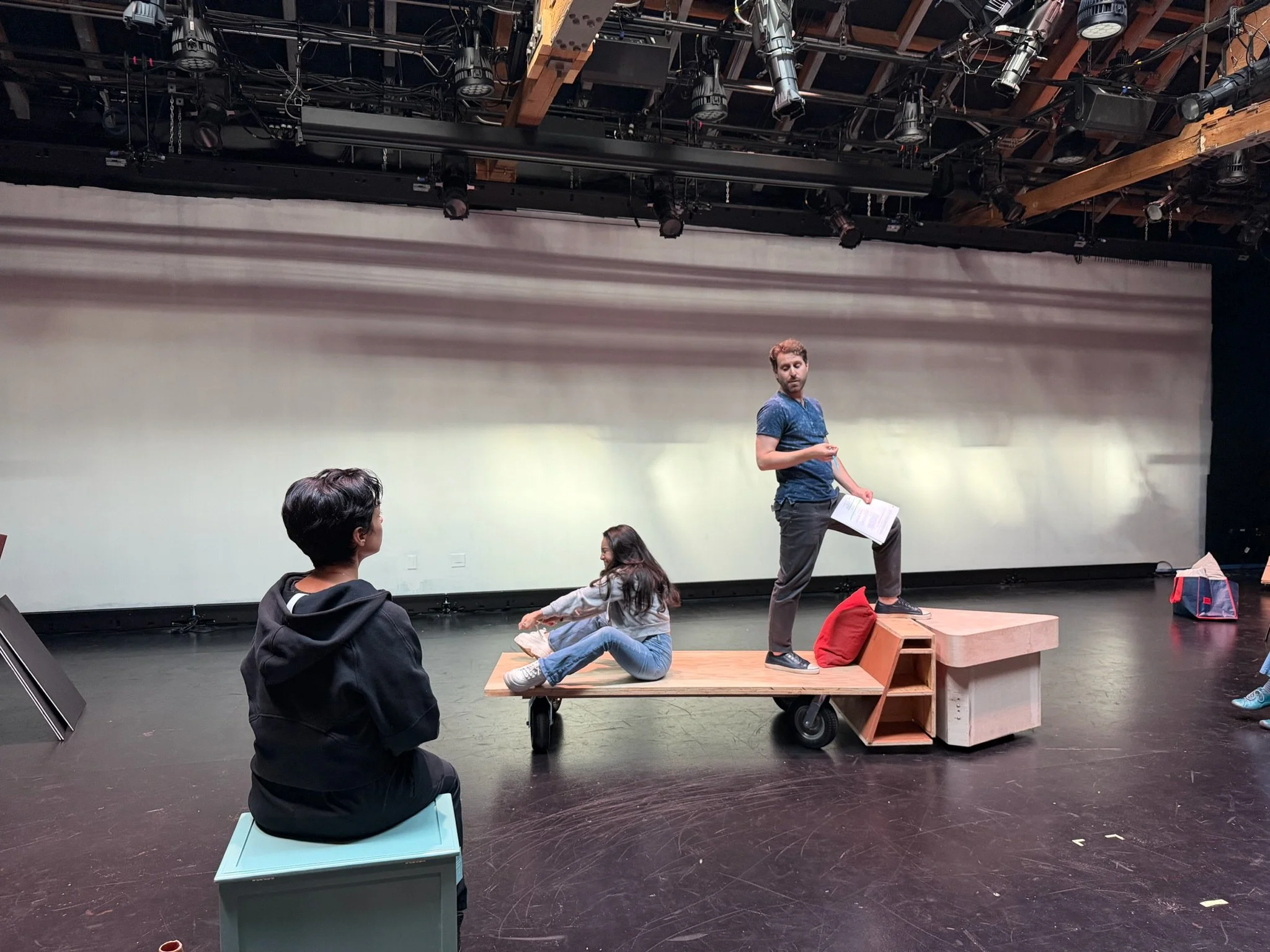
Tania Verafield, Alexandra Lee, and Andrew Brian Carter in rehearsal.
What do you see as the biggest challenge and biggest opportunity in staging O: A Rhapsody in Divorce ?
Well, time is always the biggest challenge. There never feels like there’s enough time. And there never is and, also, we will get it done, just like we always do.
I’m realizing that one of the biggest challenges for me is not getting bogged down in my own worry that after all this time of working on the play, I will somehow fuck it up. Quieting the voices of doubt in my own head is a practice and that practice is very needed now. The long build up has created a pressure inside me that I have to put aside and just do the work and enjoy the hell out of finally getting to creation!
The biggest opportunity is getting to direct in this space that I have been helping create for the last five years! I get to see how this room feels and works. It’s so amazing to be at this point of production on THIS play in THIS space with THESE people. What an amazing gift!
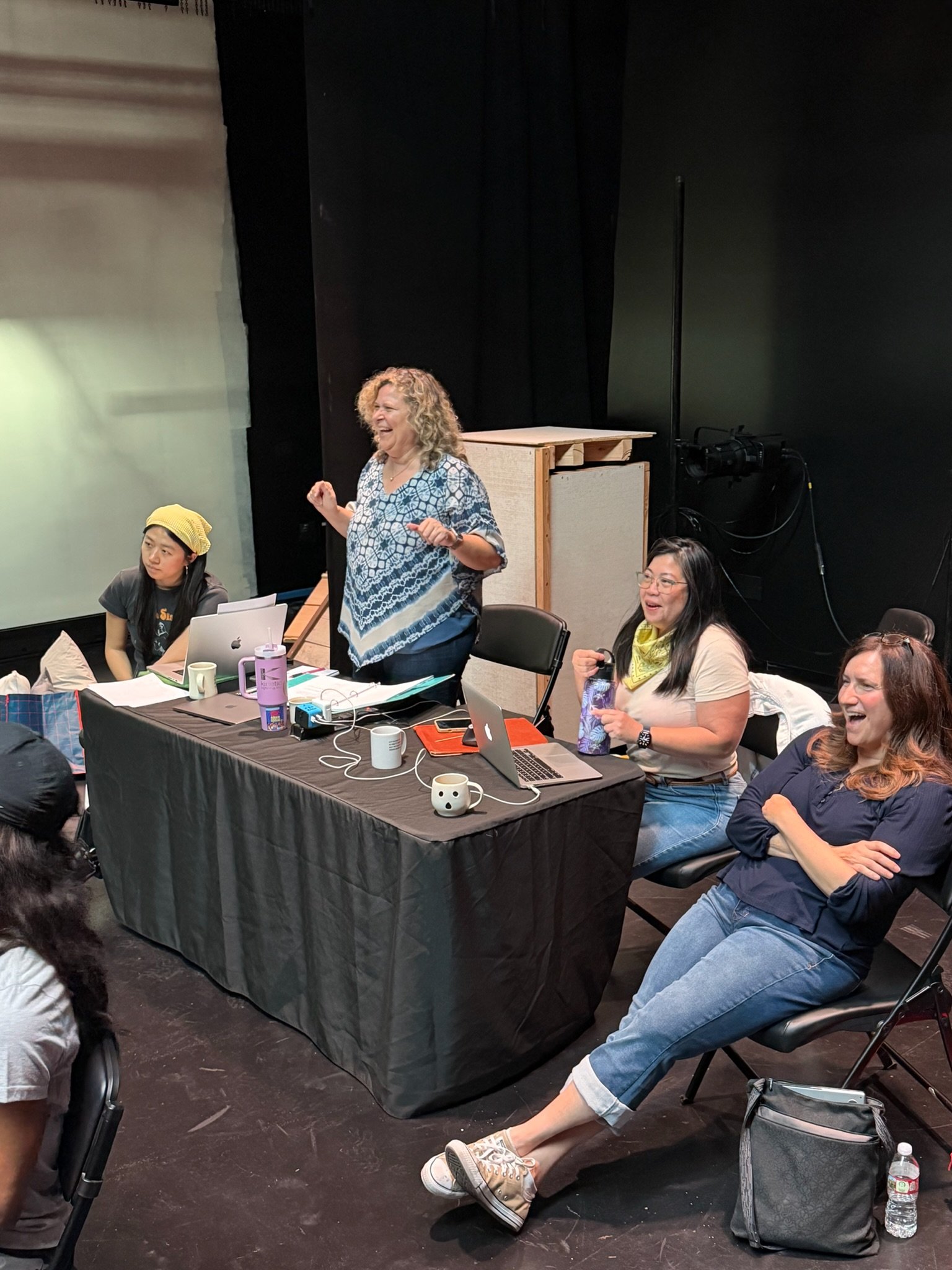
Jiahui Ji, Jessica Hanna, Cece Tio, and Jami Brandli in rehearsal.
Now about this fabulous cast! Auditions were an amazing process, shout out to Victoria Hoffman casting! We saw so many wonderful actors - Los Angeles actors are fantastic and I want to work with all of them. But choices had to be made, though I have a lot of folks in mind for future projects. Four out of five of the actors in the cast participated in a workshop or reading along the way. So they are bringing history and passion for the project into the room as well as their formidable talents. I am thrilled to work with all of them and can’t wait to see what we create. Bunch of badasses!
This is the first production you are directing at Outside In Theatre, where you are also the Artistic Director! How are you balancing your roles as Artistic Director and Director of this play?
It is and I am definitely walking a bit of a tightrope while spinning many plates during this next month. But Outside In has an incredibly supportive creative admin & production team and they are all excited about this play - I remember the sound of Matt Pitner’s (General Manager & Co-Assoc Artistic Director) laughter at the workshop of O that we did at Inkwell Theatre back in 2023 and he enthusiastically co-signed when I proposed it to be part of our first season in the new ArtSpace theatre we were in the midst of building. I am trying to build the rehearsal/production schedule to make sure I have time to work on the Business of the theatre as well as the Art of the theatre. This is what is needed from the Artistic Director always, and especially when she is directing in her space. Making a play is always a learning process and a survival experience, this one has a few more levels that are in play at the same time. It’s funny, it makes me think of the Viewpoints and how they are all happening all the time and it’s just a matter of where you put your attention or focus. I think I am going to be applying that idea to this process. I can change my focus/attention on a number of projects throughout a day, the big trick will be to give ALL of my attention in the moment and quiet the others until I turn my focus to them. I will definitely be using all of the tools I’ve been creating. I can’t truly express how grateful I am to have this opportunity to figure out how to be a director and an artistic director at the same time. If you’re in the rehearsal room you may hear me saying to myself: You are living the dream. Come on Queen, let’s do this!
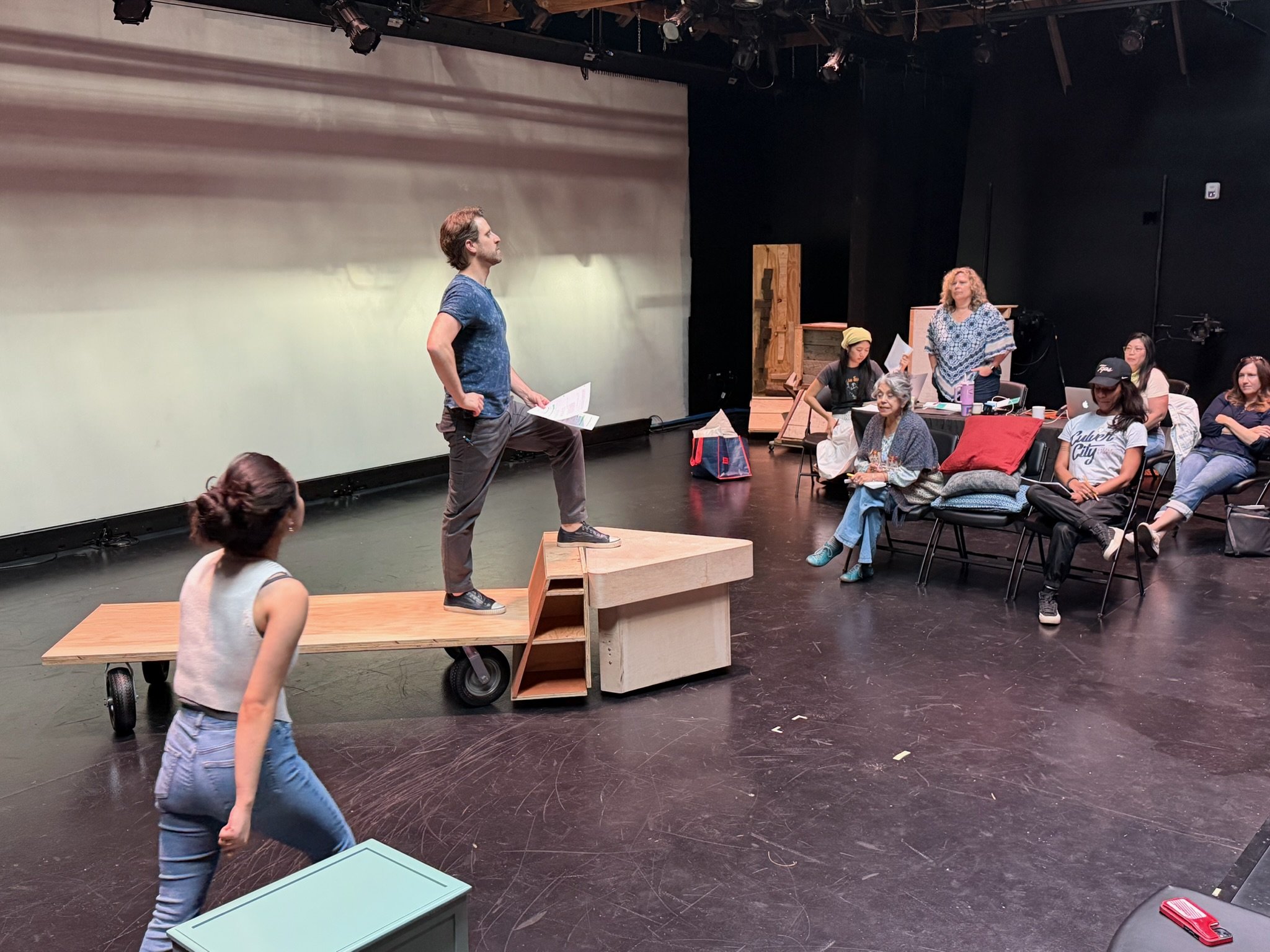
What practices are the cornerstones of your directing process? How are those practices consistent and how are they adapted for each play you direct?
I have a background in and love for Viewpoints and use various exercises from my teachers or that I’ve created using those tools, throughout my process. The trick is to find the time in the rehearsal schedule for physical and ensemble building work. There are times in shorter processes when I’m in the midst of this physical work with a cast and I worry that we should be working on blocking instead, but inevitably that work will come through in later rehearsals and make the blocking more intuitive or we find connections quicker between characters, so even when it feels like there’s no time, I still schedule some sort of exploration time. Even a group physical warmup for 15 mins will engender connections that can be foundational in the rest of the work.
I always read out room agreements at the start of any process, whether it’s a full production, a workshop or even a reading that rehearses for a day. It’s a practice that gives some boundaries or parameters to the group which gives folks something to hold on to as we head into the unknown. Making a play is a great adventure into the unknown - even if you have planned it all out and know what the design is, there is still the unknown in bringing the whole group together and room agreements are really helpful. I credit Carly DW Bones with introducing me to a room agreements practice in rehearsal back in 2018/19 and I am super grateful to her for that gift. Sometimes I feel a little goofy reading them out, but the act of speaking them into the room is good for all of us, including me - this is what I am agreeing to as well and I will make every effort to walk the talk that is in them.
The other cornerstone I have is embracing “I Don’t Know” as a creative space. Meaning, I plan and prep and when I walk into the room I also know there will be lots of moments where I Don’t Know is the answer that comes from me, the playwright, one of the actors, etc. And I am always looking for those moments and how to dig in and move through them with everyone in the room. We can’t back off of I Don’t Know or we will never get to I Know. And it can be really hard to not immediately have an answer. It’s disconcerting and vulnerable. Anne Bogart has a great suggestion in one of her early books, that when she doesn’t have an answer to a question from an actor, she gets herself to move toward the stage and the actor. Actually physically moves toward them. And in that act of moving toward the problem, or the I Don’t Know of it all, some sort of answer will present itself. So when I don’t know, I try moving toward that mystery, and if I can I will actually physically move because my body moving will help my mind and heart find something that is worth trying, if not an actual answer.
How are you approaching creating the world of O: A Rhapsody in Divorce with the designers?
We’ve been doing a lot of discussing and then going away and they research and think and come back with more proposals. We are figuring out the rules of the world together. I make requests and suggestions, but I am always open to their suggestions or questioning/pushback on my requests. Maureen & Sybil work with this platform, Notions, so I can go in and see their research and different drafts of the set and see how their thinking is evolving through our conversations. There will be things in the design that no audience may know the exact why of but they will feel that everything is thought through and specific. Like, there is an element of the set that is inspired by the visual artist Mike Kelley because in one of our walk throughs of the space I told Maureen about how he once used the warehouse that the theatre is now in as a studio back in the 2000s. She then went and looked through Mike Kelley’s work and found something that she thought the shapes from could be used as an element in our set. No one will know why that set piece has this specific shape but us but that kind of specificity means that the audience will clock it in their own way as something that is significant. And if the audience feels a significance they will add it in to the story they are creating in their head while watching and that is the kind of deep engagement I want from my audiences.
When I say we are discovering the rules of the world, I mean that in a play that could go very abstract because it moves so swiftly from place to place, we figure out parameters that will help us define the world and give us anchors in a fluid space. Things like which sounds are “real” meaning made by actors on stage - the ringing of a triangle or the crash of cymbals - and which sounds are created by Amelia, the sound designer, a violin or the wind and waves and the sound of a car stalling out. Creating a world and making rules is really helpful to keep us focused and moving forward. And we all know that rules can be broken and transformed, but still necessary. We have to make the container for the deep work to happen.
For costumes the color palette is now part of defining when a character is being played by the chorus/ensemble. And each character has a minimal amount of items to show that character, so we have to be really specific about what that one item is and how it can show us as much as possible about the character, very quickly.
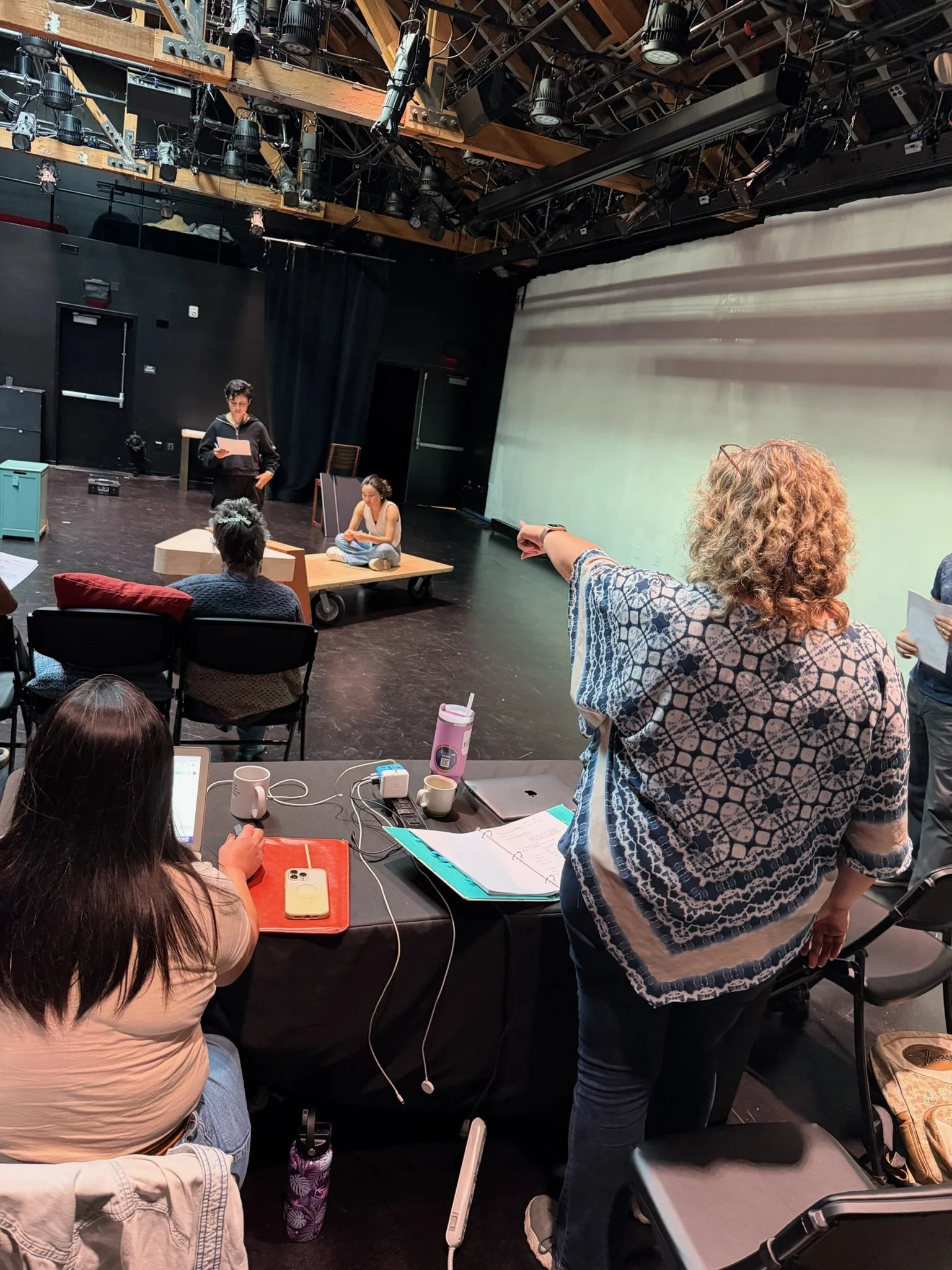
How is the Director Driven Production Grant allowing you to more fully realize your directorial vision?
This grant is giving an extra boost to our budget in some areas that will allow for the designers and my collaborative vision to come to fruition on a level that we did not think possible. And the company and I are deeply grateful for the support of the director and my dreams for the play. I think it’s extraordinary to focus on the director, it so rarely happens, and how to help them walk their talk.
Jessica in power directing mode.